Article • 4 min read
The AI advantage: How smart automation gives IT teams their lives back
Discover how AI-powered automation helps IT teams handle more tickets, reduce handle times, and shift from reactive firefighting to proactive innovation.


Justine Carroll
Director, Product Marketing at Zendesk
更新日: December 12, 2025


IT teams are facing a critical challenge. The demand for support is growing exponentially, driven by an explosion of SaaS applications, complex hybrid work models, and rising employee expectations. Yet, resources and headcount often remain static. This widening gap leaves highly skilled IT professionals trapped in a cycle of reactive firefighting, handling an endless stream of repetitive requests like password resets and software access queries.
This operational drag doesn’t just lead to burnout; it stifles innovation and directly impacts company-wide productivity. When your teams are occupied with low-level tasks, they can’t focus on the strategic projects that drive the business forward. Rather than work harder or hire faster, teams need to fundamentally change how they work. The solution lies in intelligent, AI-powered automation.
The reality: More tickets, stagnant resources
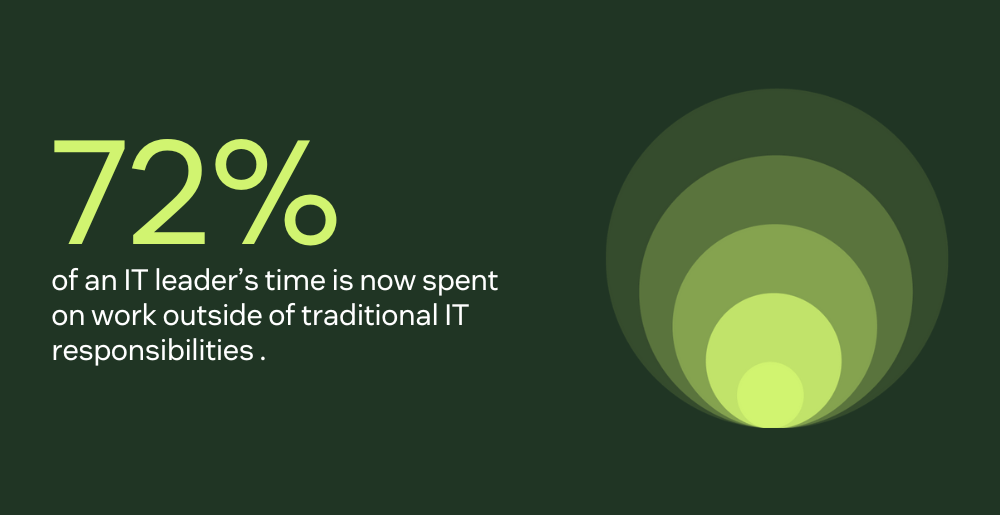
The current state of IT is one of increasing pressure. Our research shows that 72% of an IT leader’s time is now spent on work outside of traditional IT responsibilities. Your team is now a core stakeholder in HR, finance, and legal workflows, orchestrating a complex web of systems to ensure the entire business operates smoothly.
This expanded scope means more tickets and greater complexity, often without a corresponding increase in budget or staff. Teams are forced to do more with less, which is an unsustainable model. It leads to longer resolution times, frustrated employees, and a burned-out IT department. The cost is significant, as 74% of employees report that a simple technical issue can bring their entire day to a halt.
The solution: Intelligent automation at scale
The key to liberating your team from the burden of repetitive work is automating a significant portion of incoming requests.
These aren’t basic chatbots, but intelligent agents that can:
- Provide instant self-service: Use generative AI to build a comprehensive knowledge base, allowing employees to find answers to their own questions 24/7.
- Automate resolutions: Handle common tasks like provisioning software licenses, resetting passwords, and managing access requests from start to finish.
- Integrate into workflows: Meet employees where they already are, whether in Slack, Microsoft Teams, or email, to provide support directly in their flow of work.
By automating the high-volume, low-complexity tasks, you create the bandwidth your team needs to thrive.
The impact: Reclaiming time for strategic work
When AI handles the bulk of routine inquiries, the impact on efficiency is immediate and measurable. Github embraced this model and saw a 15% reduction in time-to-resolution and a boost in their internal CSAT to 95%. Agents save time on every ticket because AI can classify, route, and provide context before a human ever sees it.
This reclaimed time is the most valuable asset you can give your team. Instead of being bogged down by administrative tasks, they can apply their expertise to high-impact initiatives. This allows them to focus on strengthening cybersecurity, optimizing infrastructure, and partnering with other business units on strategic technology projects that deliver real value. It transforms the IT department from a cost center into a powerful engine for business growth.
The transformation: From firefighting to proactive innovation
The ultimate goal of AI-powered automation is to shift your team’s posture from reactive to proactive. Predictive analytics and AI-driven insights allow you to identify and resolve issues before they impact the wider organization.
Imagine a system that flags a faulty software update that is causing slowdowns for a specific department before the support tickets start flooding in.
This proactive approach fundamentally changes the role of IT.
- From reactive problem-solving to anticipating employee needs.
- From disjointed onboarding steps to a personalized, guided setup for new hires.
- From waiting on IT help to receiving real-time, guided fixes.
Organizations are already seeing these benefits. For example, Saretec halved their average first response time while handling twice as many tickets and their average internal and external CSAT jumped from 91.2% to 97% in less than two years. This is the power of AI liberation in action.
Give your team their lives back
The days of IT teams being overwhelmed by manual, repetitive work are numbered. By embracing an AI-first approach to service management, you can empower your team to work smarter, not harder. You can provide them with the tools to escape the reactive cycle and become the strategic, innovative force your business needs them to be. It’s time to liberate your IT team and unlock their true potential.